
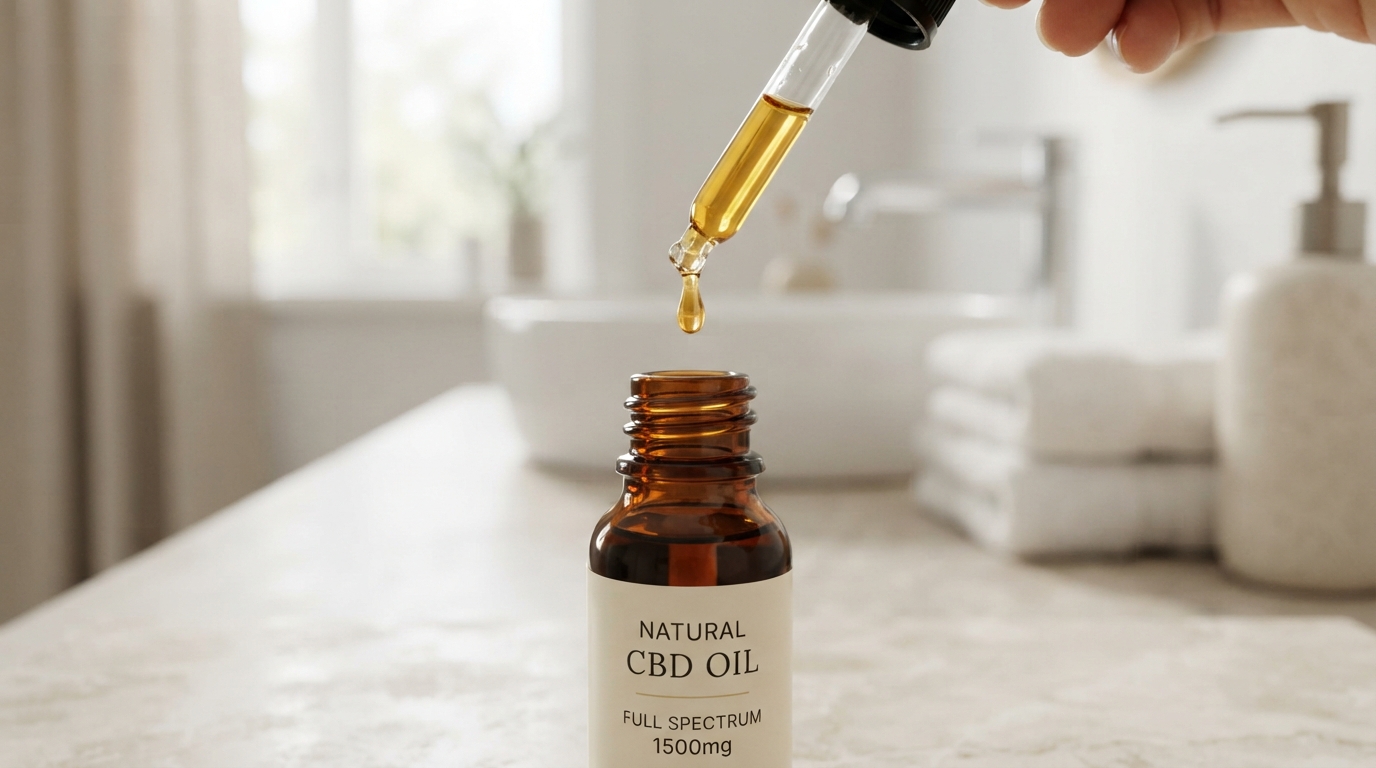
Misinformation spreads easily in a product category that grew quickly and remains only loosely regulated at the federal level. A handful of persistent myths are worth addressing directly, with the actual evidence attached. Some of these misconceptions cause real financial harm (overpaying for diluted product); others carry more direct health implications (assuming zero interaction risk with existing medication).
Myth: CBD Oil Will Get You High
This is the most common misunderstanding, and it’s simply incorrect for properly sourced hemp-derived CBD oil. THC is the cannabinoid responsible for intoxicating effects, and federally compliant hemp Holistapet CBD oil contains no more than 0.3% THC by dry weight, an amount far too low to produce any psychoactive effect. Products exceeding that threshold, or marijuana-derived CBD products, are a legally and functionally different category entirely.
Myth: All CBD Oil Is Basically the Same
Concentration, extraction method, and third-party testing vary enormously between brands, and the 2017 JAMA study referenced earlier found significant label inaccuracy across a notable share of tested products. A bottle priced well below market average is more likely to be diluted or mislabeled, since quality extraction and rigorous testing aren’t cheap to produce at scale. Treating two bottles as interchangeable just because both say “CBD oil” on the label skips over exactly the details that determine whether a product will actually work as expected.
Myth: More CBD Always Means Better Results
Higher doses aren’t automatically more effective, and some research has found a bell-curve-shaped dose-response relationship for certain effects, where effectiveness plateaus or even declines at very high doses rather than continuing to improve. Starting conservatively and adjusting gradually remains the more evidence-aligned approach compared to assuming maximum strength delivers maximum benefit.
Myth: CBD Oil Is Completely Risk-Free Because It’s Natural
Because CBD is plant-derived, it sometimes gets treated as inherently free of risk, but “natural” doesn’t mean “without any physiological effect.” CBD is processed through the liver and can interact with a range of medications through the cytochrome P450 pathway. Reported side effects in clinical research have included fatigue, diarrhea, and changes in appetite, generally mild but real enough to warrant attention, particularly at higher doses.
Myth: If a Vet or Doctor Doesn’t Mention CBD, It Means They Disapprove
Silence on the topic doesn’t necessarily reflect a negative opinion. Many physicians simply haven’t received formal training on cannabinoid pharmacology as part of standard medical education, since the field is relatively young and wasn’t part of most curricula until fairly recently. A doctor not bringing up CBD unprompted often reflects a gap in specific training or comfort discussing it, rather than a considered rejection of the compound. Bringing the topic up directly, rather than waiting for it to come up naturally, tends to get a more substantive conversation started, particularly with a physician already familiar with a patient’s full medication list and general health history.
Myth: Higher-Priced Products Are Always Purer
Price and purity don’t move in lockstep the way marketing sometimes implies. Manufacturing costs do factor into pricing, but so do marketing budgets, packaging design, and brand premium, none of which reflect the actual cannabinoid content or testing rigor of what’s inside the bottle. A mid-priced product with a transparent, current, third-party COA is a more reliable purchase than an expensive product relying on brand reputation alone without documentation to back it up, regardless of how premium the packaging looks sitting on a shelf.
A Quick Look at Market Growth
The hemp-derived CBD market has expanded substantially since the 2018 Farm Bill passed, with cannabis market research firms like the Brightfield Group tracking sustained year-over-year growth in both the human wellness and pet product segments through the years that followed. That growth has brought more competition and generally lower prices, which benefits buyers, but it’s also brought a wider spread in manufacturing quality, since starting a CBD brand (sourcing bulk extract from a third-party manufacturer and building a website) carries a lower barrier to entry than the polished branding of many products would suggest.
Myth: CBD Oil and Hemp Seed Oil Are the Same Product
This mix-up shows up constantly on store shelves. Hemp seed oil, pressed from hemp seeds, contains negligible CBD, since cannabinoids concentrate mainly in the plant’s flowers and leaves, not its seeds. Hemp seed oil is a legitimate product valued for its omega fatty acid content, but it won’t deliver the cannabinoid effects associated with actual CBD oil. Checking that a bottle specifically lists a CBD milligram content, rather than just “hemp oil” on the label, avoids this common purchasing mistake entirely.
Myth: CBD Oil Is FDA-Approved as a General Supplement
It isn’t. The only FDA-approved CBD product is Epidiolex, a prescription formulation for specific epilepsy syndromes. General retail CBD oil is sold as a supplement, not as an FDA-approved product for broader health claims, and any label suggesting otherwise should be treated with skepticism.
Myth: A Bigger, More Recognizable Brand Automatically Means Better Testing
Brand recognition and manufacturing quality don’t always move together in this particular industry, partly because CBD marketing budgets tend to concentrate on packaging design and influencer promotion, areas that have nothing to do with what’s actually inside the bottle. The JAMA study referenced earlier found mislabeling issues spanning a range of brands, not just small or unknown ones, which is a reminder that checking the actual current COA matters more than checking follower counts or shelf placement at a major retailer.
Myth: If a Dose Works Once, It’ll Always Work the Same Way
Individual tolerance and response can shift over time, particularly with changes in body weight, medication, or overall health. A dose that produced no noticeable side effects during an initial trial period isn’t necessarily the right dose indefinitely. Periodic reassessment, rather than assuming a single starting dose is permanent, tends to fit the underlying pharmacology better.
A Quick Reference Table
| Claim Often Repeated | What’s Actually True |
|---|---|
| “Won’t show up on a drug test” | Full-spectrum products contain trace THC; false positives are possible with regular high-dose use |
| “Zero side effects” | Fatigue, appetite change, and digestive upset are documented in clinical research |
| “Works the same for everyone” | Individual response varies significantly based on metabolism, weight, and product quality |
| “Legal everywhere in the US” | Generally legal federally, but state rules and enforcement vary |
Myth: CBD Oil Definitely Won’t Show Up on a Drug Test
Standard workplace drug panels are built to detect THC and its metabolites specifically, not CBD itself. A properly compliant hemp-derived CBD oil, containing 0.3% THC or less, is generally not expected to trigger a positive result on a standard panel used for routine screening. Full-spectrum products carrying trace THC do introduce at least a theoretical risk of a false positive with repeated, high-dose use over time, particularly on more sensitive testing methods. Choosing a broad-spectrum or isolate product removes this risk almost entirely, since both are formulated to contain no detectable THC at all.
Why Checking Sources Matters More Than Checking Marketing Copy
A claim citing a specific study, a named journal, or a real institution can be verified. A claim citing “recent research shows” with no further detail generally can’t be checked at all, which is usually a sign the underlying evidence wasn’t particularly strong to begin with. Applying that basic filter clears up a surprising share of the confusion still circulating around this product category, and it takes only a minute or two of searching to actually confirm whether a cited study exists and says what a product page claims it says.
A Realistic Way to Approach the Category
Healthy skepticism toward CBD oil marketing doesn’t mean dismissing the product outright. It means applying the same standard any other supplement purchase deserves: checking the actual lab documentation, understanding what’s been studied versus what’s assumed, and recognizing that a product working well for one person doesn’t guarantee identical results for someone else. That’s a fairly ordinary bar to meet, and it’s one a surprising number of product pages make harder to clear by leaving out the specific details that would let a buyer verify things independently. None of this requires a background in pharmacology, just a habit of checking the label and the documentation before checking out.
Final Thoughts
Most persistent myths about CBD oil come down to confusing it with THC, assuming natural equals risk-free, or overstating regulatory approval that doesn’t actually exist, and checking primary, named sources rather than vague marketing language resolves nearly all of them, leaving a much clearer picture for anyone actually trying to make an informed purchase.