
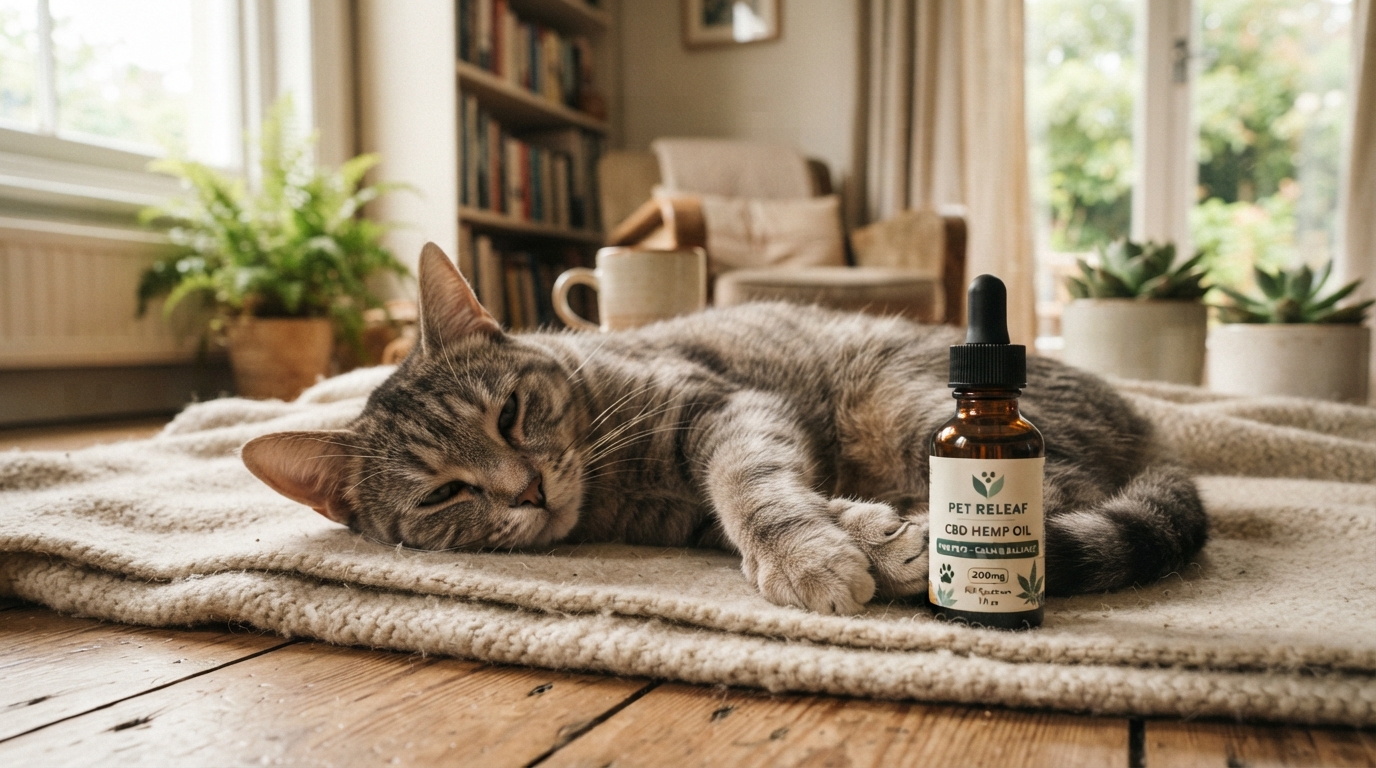
Cats are not small dogs, and nowhere is that clearer than in how their bodies handle cannabinoids. A dose that reads as safe on a dog product label does not automatically translate to a cat, and the differences run deeper than just body weight.
Here is a closer look at what actually happens inside a cat after a dose of CBD, where the risks come from, and what the research does and does not currently support.
Why THC Sensitivity Sets the Baseline
Before getting into CBD specifically, it helps to understand why THC contamination is such a central concern for feline products. Cats have a notably higher density of cannabinoid receptors in certain brain regions compared with dogs, which is part of why THC toxicity tends to hit cats harder and at lower relative doses. Accidental cannabis ingestion in cats, whether from edibles, plant material, or contaminated hemp products, is well documented in veterinary toxicology literature, with symptoms ranging from wobbliness and lethargy to changes in heart rate.
Legally, hemp-derived Holistapet CBD oil for cats products must stay under 0.3% THC by dry weight to be classified as hemp rather than marijuana under federal law. That threshold is a legal definition, not necessarily a guarantee of feline safety at every dose, since even trace THC becomes more meaningful the more product a cat consumes and the smaller the cat.
This is also why the certificate of analysis matters so much more for cat products than it might for a human supplement. A THC level that would be a rounding error for an adult person could represent a meaningfully larger relative dose for a cat weighing eight or ten pounds, especially if the product is dosed liberally or if a cat manages to get into a bottle or bag of treats on its own. Independent lab testing that confirms both total cannabinoid content and THC content specifically is the only reliable way to know what a given bottle actually contains, since label claims alone cannot be verified without it.
What Happens to CBD in a Cat’s Liver
Cats have a reduced capacity for glucuronidation, a metabolic process the liver uses to prepare many compounds for elimination from the body. This is not unique to CBD; it is a well-known feature of feline pharmacology that shapes how veterinarians dose a wide range of medications, from certain pain relievers to specific antibiotics.
CBD also interacts with the cytochrome P450 enzyme system, a separate metabolic pathway shared by many prescription drugs. When two compounds compete for the same liver enzymes, blood levels of one or both can shift unpredictably, which is the mechanism behind most clinically significant drug interactions. A cat taking medication for a chronic condition, such as hyperthyroidism, kidney disease, or a seizure disorder, could see altered drug levels if CBD is introduced without accounting for that overlap.
The one direct piece of feline safety data available comes from the 2019 Cornell University pharmacokinetic study, in which one of eight cats given 2 mg/kg of a CBD-rich hemp product twice daily for 12 weeks showed a persistent rise in ALT, a liver enzyme, for the duration of the trial. That is a single case within a small study, not proof of a broader pattern, but it is exactly the kind of finding that argues for baseline and follow-up bloodwork rather than open-ended, unmonitored use.
Dose-Ranging Data From a 2023 Study
A 2023 study published in the Journal of Veterinary Pharmacology and Therapeutics tested escalating single doses of CBD isolate in eight healthy cats, ranging from 2.5 mg/kg up to 80 mg/kg. Blood concentrations of CBD rose in proportion to dose across the range tested. Researchers reported no major changes in behavior or standard bloodwork panels, though BUN and creatinine values, both markers of kidney function, decreased slightly after treatment across all dose groups.
That kidney finding is worth flagging specifically. Chronic kidney disease is common in older cats, and any compound shown to influence kidney-related bloodwork markers, even modestly and even in the direction of improvement in this particular study, deserves closer attention before being used routinely in a cat with pre-existing kidney concerns. A single study using healthy research cats does not answer how the same dosing would behave in an older cat with compromised kidney function.
Absorption Differences That Complicate Dosing
Beyond liver metabolism, absorption itself differs meaningfully between species. The 2019 Cornell study found dogs reached a mean peak serum CBD concentration of 301 ng/mL after a 2 mg/kg dose, compared with just 43 ng/mL in cats given the identical dose per body weight. That is roughly a sevenfold difference in peak blood concentration, despite an identical weight-adjusted dose, which makes clear why simply scaling down a canine dosing chart for a smaller animal does not produce a comparable result in a cat.
A separate 2022 study using a CBD/CBDA hemp paste found average feline Cmax values closer to 282 ng/mL, notably higher than the oil-based product tested in 2019. That gap between two feline studies, using different formulations, illustrates how much delivery method and product formulation can influence how much CBD actually reaches a cat’s bloodstream, independent of the labeled dose on the bottle. An owner following dosing instructions from one product’s label cannot assume those numbers transfer cleanly to a different brand or formulation, even at the same stated milligram amount.
Signs Worth Monitoring at Home
For an owner whose veterinarian has approved a trial of CBD, a short list of things to watch during the first few weeks is more useful than a vague instruction to “watch for side effects”:
- Appetite changes, either increased or decreased, compared to the cat’s normal eating pattern.
- Lethargy or unusual sedation, particularly if it persists beyond the hours immediately following a dose.
- Changes in litter box habits, including frequency of urination or any signs of diarrhea.
- Excessive drooling, which has been noted in at least one feline pharmacokinetic study as a reaction to dosing.
- Any behavioral change that seems disproportionate to the situation, since cats can react to novel tastes or textures in ways unrelated to the CBD itself.
Interaction Risk With Common Cat Medications
Cats frequently take medications for thyroid disease, kidney disease, or chronic pain, and each of these categories carries some theoretical interaction risk with CBD given its effect on liver metabolism.
| Medication category | Why interaction risk exists |
|---|---|
| Anti-seizure medications (e.g., phenobarbital) | Both compounds are metabolized through overlapping liver pathways, and interaction has been documented in canine studies |
| Thyroid medications | Altered liver metabolism could theoretically affect circulating hormone levels, though feline-specific data is limited |
| NSAIDs and other pain medications | Combined effects on liver processing warrant monitoring, particularly with long-term use |
| Medications requiring narrow, precise dosing | Any shift in blood levels caused by a metabolic interaction carries more consequence when the therapeutic window is already narrow |
This is not a complete list, and the strength of evidence behind each interaction varies considerably, with most of the documented interaction data coming from canine rather than feline studies. A 2022 study on the drug-drug interaction between CBD and phenobarbital in dogs, published in the American Journal of Veterinary Research, found measurable changes in phenobarbital blood levels when the two were combined, one of the more concrete examples of exactly this kind of interaction in a companion animal, even though the study involved dogs rather than cats.
It is, however, a reasonable starting point for the conversation an owner should have with a veterinarian before combining CBD with any existing prescription, particularly for a cat managing a chronic illness where medication levels are already being monitored closely. Bringing a full, current list of the cat’s medications and supplements to that conversation, rather than mentioning CBD in isolation, gives a veterinarian the clearest picture of where an interaction risk might actually exist.
Final Thoughts
The clearest safety lesson from the current research is that cats process CBD differently than dogs do, both in how much reaches the bloodstream and in how it may interact with existing medications. Baseline veterinary guidance, follow-up bloodwork, and close attention to any medications already in use matter more here than they might for a species with a longer track record of feline-specific study.